Destinations
The 10 Best Companion Courses at Multi-Course Resorts, Ranked
The best second courses at multi-course golf resorts, ranked. Pacific Dunes, Bahia at Punta Mita, Spyglass Hill, and 7 more that outshine the headliners.
Destinations
The best second courses at multi-course golf resorts, ranked. Pacific Dunes, Bahia at Punta Mita, Spyglass Hill, and 7 more that outshine the headliners.
The headline course at a great multi-course resort gets the press. The Tail of the Whale, the 18th at Pebble Beach, the 17th at Sawgrass. Those are the holes the magazines photograph and the trips are organized around. The second course on the property, the one most guests squeeze in if their stay runs more than 3 nights, often turns out to be the most rewarding round of the trip.
This is a list of companion courses: the courses that play in the shadow of a more famous neighbor at the same resort, and that deserve more attention than they get. Ranked.
1. Pacific Dunes at Bandon Dunes Golf Resort (Oregon)
Tom Doak's 2001 follow-up to Bandon Dunes itself, built on the same coastal site and now widely considered the better of the two. The argument for Pacific Dunes is the routing: 4 par 3s on the front 9 (one of them, the 11th, is just 138 yards uphill into wind that's almost always there). Doak refused the convention of distributing par 3s evenly across the round and built the course around the natural land. The result is a piece of architecture that's been studied by every Doak project since.
It opens this list because Pacific Dunes is the companion course that most often outshines its headline neighbor, and that pattern is the one that defines this category.
2. Bahia at Four Seasons Resort Punta Mita (Riviera Nayarit, Mexico)
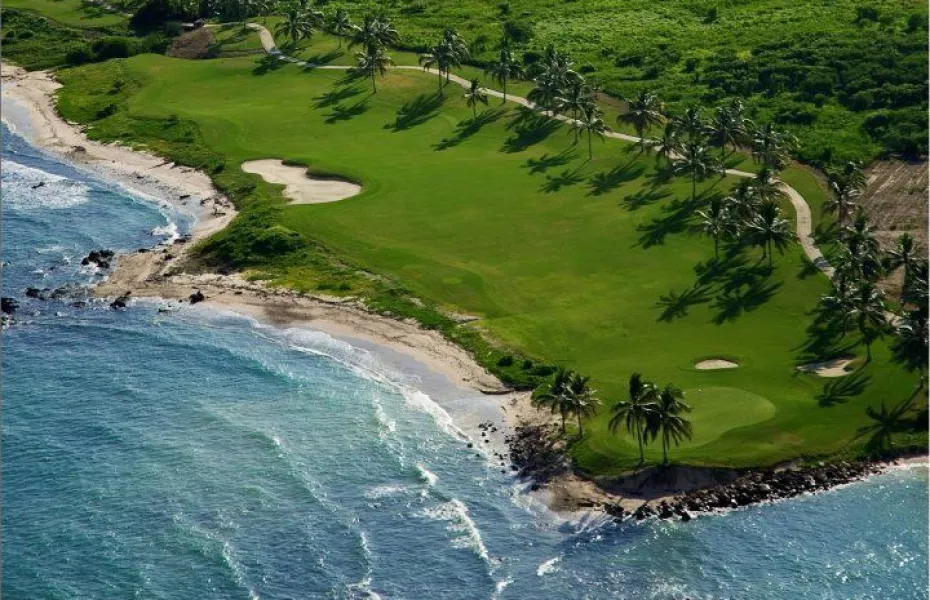
The 2007 Jack Nicklaus follow-up to Pacifico (where the Tail of the Whale lives). Pacifico gets the photography and the press; Bahia gets the rounds played by guests who realize on day 2 that they have time for more golf. The course routes inland through tropical jungle with the ocean appearing on the front 9 and the Sierra Madre mountains framing the back, which gives it a different visual rhythm than the coastline-heavy Pacifico.
The case for Bahia as the better routing on the property (which several visiting golf writers have made) rests on shot variety: Pacifico's drama is concentrated in the 3rd hole. Bahia distributes its interest across the full 18, with elevation changes that Pacifico doesn't get and bunkering that's more strategic than penal.
It's not a course anyone would pick over Pacifico for a single-round visit, but for golfers staying long enough to play 36 holes, Bahia is the round that lingers.
How to play it: Both courses are part of Four Seasons Resort Punta Mita. Resort guests have priority access; outside play is sometimes available through the resort's golf program. Bahia is generally less booked than Pacifico, which is its own argument.
3. Spyglass Hill at Pebble Beach Resorts (California)
Robert Trent Jones Sr.'s 1966 design at Pebble Beach Resorts, often described as harder than Pebble itself by the players who play both. The first 5 holes route through the dunes along the Pacific in the closest thing American golf has to traditional links exposure, then the routing turns inland through Del Monte Forest for the back 9. The shift from open links to tree-lined parkland is jarring on first play and brilliant on second. Tour pros who play the AT&T Pebble Beach Pro-Am annually often say Spyglass is the harder of the courses in the rotation.
How to play it: Spyglass is part of the standard Pebble Beach Resorts stay-and-play package. Green fees in the $400 range. Available to public play with a Pebble Beach Resorts hotel reservation.
4. Pinehurst No. 4 at Pinehurst Resort (North Carolina)
Originally a Donald Ross design, then renovated multiple times before Gil Hanse stripped it back to native sandscape in 2018. The current version is what the original course might have looked like before decades of conditioning softened it. The greens are convex Donald Ross domes, the bunker faces are wild and natural, and the routing across the resort grounds shares character with No. 2 without being a copy. It's the second-most-played course at Pinehurst now, and several Donald Ross specialists prefer it to No. 2.
How to play it: Pinehurst is open to public play. Stay at the Carolina, Holly, or Manor for stay-and-play access. Green fees $400-500 for No. 4. Multi-course packages are the way to do Pinehurst.
5. Streamsong Red at Streamsong Resort (Florida)
Bill Coore and Ben Crenshaw's 2012 design at Streamsong, the central Florida resort built on reclaimed phosphate mining land. Streamsong Red plays the role of the more strategic, more forgiving counterpoint to Tom Doak's Streamsong Blue (also 2012) and Gil Hanse's Streamsong Black (2017). When Black opened in 2017, Red lost its position as the property's headliner. Coore and Crenshaw's routing through the dunes is the most subtly varied of the three courses, and the decision-making it asks for is what walking players come back for.
How to play it: Streamsong Resort offers stay-and-play packages. Multi-day stays at the Streamsong Lodge open priority tee times across all 3 courses. Green fees $200-300 depending on season.
6. Cabot Links at Cabot Cape Breton (Nova Scotia)
The original 2012 course at Cabot Cape Breton, opened 3 years before Cabot Cliffs (which gets most of the global ranking attention). Rod Whitman designed Cabot Links on a former coal mining site along the Cabot Strait, and the result is the most authentic links experience in North America: low, exposed, wind-sculpted, with the Atlantic visible from every hole. Cliffs is more dramatic; Links is more honest.
How to play it: Cabot Cape Breton operates as a destination resort. Travel commitment is real (a flight to Halifax, then a 3.5-hour drive to Inverness). Stay at the Cabot Lodge or one of the on-property villas for full course access. Green fees CAD $250-350 per round.
7. Mammoth Dunes at Sand Valley Golf Resort (Wisconsin)
David McLay Kidd's 2018 follow-up to the original Sand Valley course (Coore and Crenshaw, 2017). Mammoth Dunes was designed to be more fun, less penal, and more visually dramatic than the original, and it accomplishes all three. The fairways are wider, the bunkers are larger, and the green complexes are the most contoured of any course at Sand Valley. It's the easier round at the resort, and it's also the one most guests want to play twice.
How to play it: Sand Valley Golf Resort is a destination property in central Wisconsin. The closest commercial airport is Central Wisconsin (CWA), an hour away; Minneapolis is 4 hours by car. Lodging is on-property. Green fees $200-275.
8. Plantation Course at Sea Island Golf Club (Georgia)
Walter Travis's 1928 design at Sea Island, restored by Davis Love III in 2019. Plantation gets less attention than Seaside (the more famous course on the property, with its ocean views and Davis Love-Tom Fazio collaborative redesign), but Plantation's 13th hole, a par 4 that asks for a draw shaped around an oak tree, is the kind of strategic challenge that older parkland design produced and modern design rarely attempts.
How to play it: Sea Island Golf Club access is bundled into stays at The Cloister or The Lodge at Sea Island. Both hotels are Forbes Five-Star-rated. Green fees in the $300-400 range for resort guests. The Lodge has bagpipe ceremonies at sunset that have become a tradition.
9. Dye Fore at Casa de Campo (Dominican Republic)
Pete Dye's 2003 second course at Casa de Campo, sitting on cliffs above the Chavón River with what's regularly described as the most dramatic inland golf scenery in the Caribbean. Teeth of the Dog (Dye's 1971 oceanfront design at the same resort) gets all the press, but Dye Fore is the course that surprises returning visitors who came for Teeth of the Dog and discovered the Chavón holes. The 18th, a par 5 along the cliff edge with the village of Altos de Chavón visible across the canyon, is one of the best closing holes in resort golf.
How to play it: Casa de Campo is a destination resort 90 minutes east of Santo Domingo. Stay at the resort itself for golf access. Green fees in the $300-400 range. Teeth of the Dog is a separate fee and requires advance booking.
10. El Cardonal at Diamante (Los Cabos, Mexico)
Tiger Woods's first signature course design, opened in 2014 at the Diamante Cabo San Lucas development on the Pacific side. Davis Love III's Dunes Course at the same property is the more famous of the two, but El Cardonal does what Woods's design philosophy promises: wide fairways, demanding greens, and a routing that rewards strategic positioning over distance. The course also benefits from the same desert-meets-Pacific terrain that puts Diamante on most "best courses in Mexico" lists.
How to play it: Diamante is a private development, but resort access is available through stay-and-play partnerships with select hotels in Cabo. Green fees $400-500 for resort guests. Confirm access channels before booking the trip.
A Note on the Ranking
The criterion. This list rewards courses that share a property with a more famous course, that get less press as a result, and that hold up against the headline course on architectural grounds. A course that's clearly worse than its headline sibling didn't make the list, no matter how famous the property.
Why no Pebble Beach companions beyond Spyglass. Spanish Bay (Robert Trent Jones Jr., Tom Watson, and Sandy Tatum) is solid but doesn't reach the level of the courses on this list. Pebble Beach Resorts genuinely has 1 great companion course, and that's Spyglass.
Why Bahia ahead of Spyglass. Spyglass Hill is a more decorated course on the rankings circuit. Bahia gets the higher slot because the gap between Bahia's reputation and its actual quality is larger. Bahia is the most underrated of the well-rated companion courses in resort golf.