Destinations
The 10 Best Par 3s in Resort Golf, Ranked
The 10 best par 3s in resort golf, ranked. From TPC Sawgrass's island green to Pacifico's Tail of the Whale, the holes worth booking a flight to play.
Destinations
The 10 best par 3s in resort golf, ranked. From TPC Sawgrass's island green to Pacifico's Tail of the Whale, the holes worth booking a flight to play.
The par 3 is the most exposed hole on the scorecard. There's no fairway to bail out into, no second shot to recover with, no path that hides indifferent ball-striking. A great par 3 puts the player and the green and the trouble in plain view, and it does so in a way that becomes the photograph everyone takes home.
Resort golf, by its nature, gets to design for moments. The hole that ends up on the brochure cover. The one the caddie tells you about before the round. Here are the 10 best par 3s in resort golf, ranked, with notes on what makes each work and how to actually get on and play it.
1. 17th at TPC Sawgrass (Players Stadium Course, Ponte Vedra Beach, Florida)
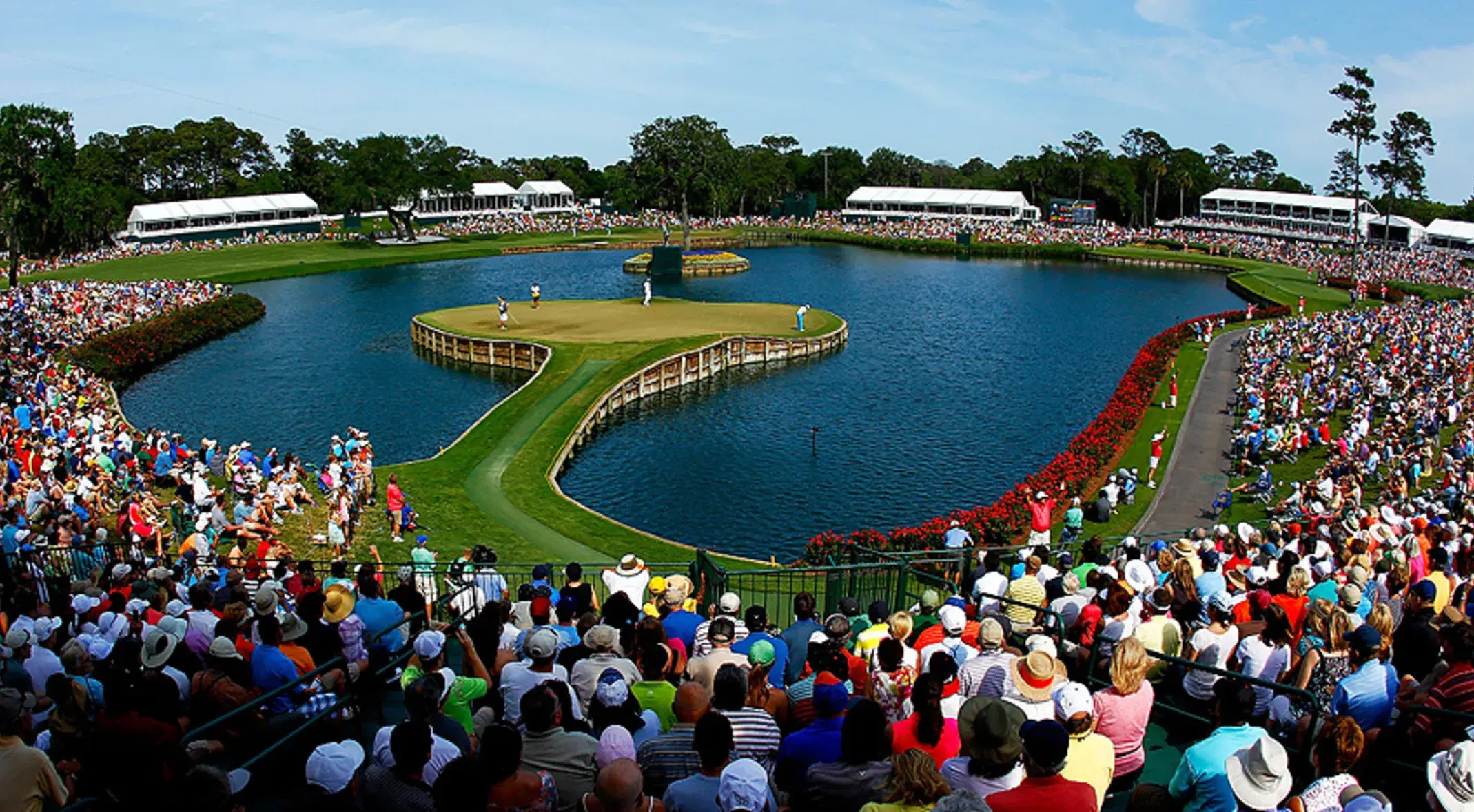
The most televised hole in golf. A 137-yard par 3 to an island green ringed entirely by water, designed by Pete Dye in 1980 and refined over the decades since. During the Players Championship, roughly 100,000 balls find the water in a typical year, which says more about the psychological weight of the shot than the physical demand. The green is 78 feet deep, larger than it looks on television. Any halfway player can clear the water. The trouble is convincing the brain to swing freely with no bailout in sight.
How to play it: TPC Sawgrass operates as a public course attached to the Sawgrass Marriott Resort. Stay at the Marriott or book through a third-party tee time service. Green fees run $400-600 in season. Take one extra club. The water is closer than your brain thinks it is.
2. 3B at Pacifico (Four Seasons Resort Punta Mita, Riviera Nayarit, Mexico)
The only natural island green in golf. A par 3 playing 194 yards across the Pacific Ocean to a green built on a rock formation accessible only at low tide via a natural land bridge. At high tide, you play to an alternate green on the mainland (designated 3A), which is why the island green carries the "3B" suffix. Jack Nicklaus designed the course in 1999 and routed the hole around the rock formation because the formation happened to be there, sitting in the ocean at exactly the right distance from the tee. The tee shot carries entirely over open ocean, with humpback whales visible during winter months (December through March).
Sawgrass's island green is engineered; this one is geological. The argument for #1 over #2 comes down to which kind of island green you find more interesting, and even golfers who give Sawgrass the top spot acknowledge that 3B is the only hole of its kind in the sport.
How to play it: Pacifico is part of Four Seasons Resort Punta Mita. Resort guests have access, and limited outside play is sometimes available through the resort's golf program. Check tide charts before the round; the island green is only playable at certain times. The Bahia Course (also a Nicklaus design) is the second 18 on the property.
3. 7th at Pebble Beach Golf Links (Pebble Beach, California)
The shortest hole on the PGA Tour at 106 yards, playing from an elevated tee directly down toward the Pacific to a tiny green perched above the rocks. On a still day, it's a wedge; in a Pebble Beach winter wind, it's a 5-iron that comes up short. The hole works because the dramatic shift in club selection based on conditions is so unusual at this distance, and the visual (the entire shot framed against the ocean) is one of the most photographed scenes in golf.
How to play it: Pebble Beach Golf Links is open to public play with a Pebble Beach Resorts hotel reservation. Green fees are $700+ in season. Multi-night stays at The Lodge or The Inn at Spanish Bay improve booking access. Book the round 18 months out for high-season slots.
4. 17th at the Ocean Course at Kiawah Island (Kiawah Island, South Carolina)
A 197-yard par 3 across a salt marsh to a green that sits like a peninsula in the wetlands. Pete Dye designed the course for the 1991 Ryder Cup ("the War on the Shore") and the 17th has been the heartbreak hole at the 2012 and 2021 PGA Championships. The green has water on the left and bunkers around back, which would be enough trouble even without the wind that comes off the Atlantic and turns a 6-iron into a 4-hybrid.
How to play it: The Ocean Course is open to guests of The Sanctuary at Kiawah Island Golf Resort and to outside golfers booking through the resort's golf program. Green fees in the $400-500 range. The course is brutal from any tee. Play one set forward of where ego suggests.
5. 5th at Old Head Golf Links (County Cork, Ireland)
A 200-yard par 3 from a clifftop tee to a green perched on a promontory 200 feet above the Atlantic. The cliffs of the Old Head peninsula form a horseshoe around the routing, and the 5th hole plays directly out over the ocean with the cliff edge running the entire right side of the green. The wind comes from the southwest most days and turns the carry into something of a guess.
How to play it: Old Head is open to public play with advance booking. Green fees €350-450 depending on season. The Old Head Premier package includes lodging at the on-site lodge, dinner, and 36 holes. A car from Cork city is 90 minutes; from Kinsale, 25.
6. 11th at Cabo del Sol Ocean Course (Los Cabos, Mexico)
A 178-yard par 3 over a Pacific cove to a green guarded by ocean on the left and bunkers right. The view from the tee, with the Sea of Cortez stretching to the horizon and waves breaking on the rocks 50 feet below, is the kind of scene that distracts even good ball-strikers. The course's broader claim to fame is the run of holes 17-18 along the ocean, but 11 is the photograph everyone takes home.
How to play it: Cabo del Sol Ocean Course has been re-positioned under new ownership and is currently in a renovation phase. Check current operational status before booking. When fully open, green fees historically run $300-400 for resort guests in the Cabo corridor.
7. 16th at Whistling Straits (Sheboygan, Wisconsin)
A 220-yard par 3 along the Lake Michigan shoreline, with the lake hard left and a series of stacked-stone bunkers framing the right side. Pete Dye designed Whistling Straits in 1998 in the Irish links style on a former military base. The 16th plays into the prevailing northwest wind off the lake, which turns club selection into a coin flip between 4-iron and 5-iron and makes the cliff-side carry feel longer than it measures.
How to play it: Whistling Straits is part of Destination Kohler. The Straits Course is open to public play with a Destination Kohler hotel reservation (American Club, Inn on Woodlake, etc.). Green fees $500-600. The course is closed November through April due to Wisconsin winter.
8. 3rd at Mauna Kea Golf Course (Big Island, Hawaii)
The hole that put resort golf in Hawaii on the map. A 205-yard par 3 over a Pacific Ocean inlet to a green built into a black lava cliff. Robert Trent Jones Sr. designed the course in 1964 on a piece of land that had no soil to speak of (it's all volcanic rock). Soil was barged in. Grass was hand-planted. The 3rd hole was the moment the design philosophy clicked: ocean carries make every other element of the course feel alive.
How to play it: Mauna Kea Golf Course is open to public play. Mauna Kea Beach Hotel offers stay-and-play packages. Green fees $300-400 for resort guests. The Hapuna Golf Course, also on property, is a shorter and more forgiving alternative.
9. 5th at Quivira Golf Club (Los Cabos, Mexico)
A 175-yard par 3 from an elevated tee to a green perched on a granite cliff above the Pacific. Quivira is built on a stretch of coastline at the western edge of Los Cabos near Land's End, with several holes routing along or over the cliff line. Jack Nicklaus designed the course on what's regularly described as the most dramatic coastal site he's worked with. The 5th is the postcard hole, but the par 3 13th (also along the cliffs) is in the same conversation.
How to play it: Quivira is part of the Pueblo Bonito resort complex. Hotel guests book preferred tee times. Green fees $400-500. The cart paths drop and climb dramatically, which is part of the Quivira experience.
10. 11th at Streamsong Black (Bowling Green, Florida)
The youngest course on this list (Streamsong Black opened in 2017) and a Gil Hanse design that does something rare in modern resort golf: it builds a par 3 with a green so contoured that putting from the wrong side is harder than the approach shot itself. The 11th plays 200 yards over a hazard to a green with a deep right-to-left tilt, and the ball-mark on the green tells you everything about whether the next 30 minutes will go well.
How to play it: Streamsong Resort has 3 18-hole courses (Black, Red, Blue) and a short course (The Chain). Green fees $200-300 depending on course and season. Book a multi-night stay at the Streamsong Lodge to maximize tee time access. Central Florida, so playable year-round, but summer thunderstorms shift afternoon rounds frequently.
A Note on the Ranking
Why TPC Sawgrass at #1. The 17th at Sawgrass is the most-played, most-televised, and most-photographed par 3 in golf, and accessibility (resort access, public booking) puts it in reach for any traveler willing to make the trip. The Tail of the Whale is the rarer hole, but Sawgrass earns the top spot on the basis of cultural footprint and playing accessibility combined.
Why no Augusta, Cypress Point, or Pine Valley. Those are private holes at private clubs. The "resort golf" filter intentionally excludes them. They'd be on a different list.
The Mexico contingent. 3 of the 10 are in Mexico (Pacifico, Cabo del Sol, Quivira), which reflects how strong the country's resort golf inventory has become at the Pacific coast in particular. The desert-meets-ocean and jungle-meets-ocean settings produce holes that the flat, less dramatic sites in the eastern US can't replicate at the same scale.