Destinations
The 18 Best Golf Courses in Scotland You Can Actually Play
A practical guide to Scotland’s best accessible courses, organized to help you plan a trip that actually works.
Destinations
A practical guide to Scotland’s best accessible courses, organized to help you plan a trip that actually works.
Scotland has over 550 golf courses. The game was invented here (or at least codified here, depending on how pedantic you want to get about the Dutch). And the marketing around Scottish golf leans heavily on names like the Old Course, Muirfield, and Royal Troon, places that are genuinely magnificent but also genuinely difficult to access without a member connection, a ballot win, or a willingness to pay north of £400 for a single round.
This list is built around a different question: if you're a visiting golfer with a week or two in Scotland and no connections, where should you actually play?
Every course here is open to visitors. Some are expensive. Some are shockingly cheap. All of them are worth your time, and I've organized them roughly by region so you can build a trip around clusters rather than zigzagging across the country.
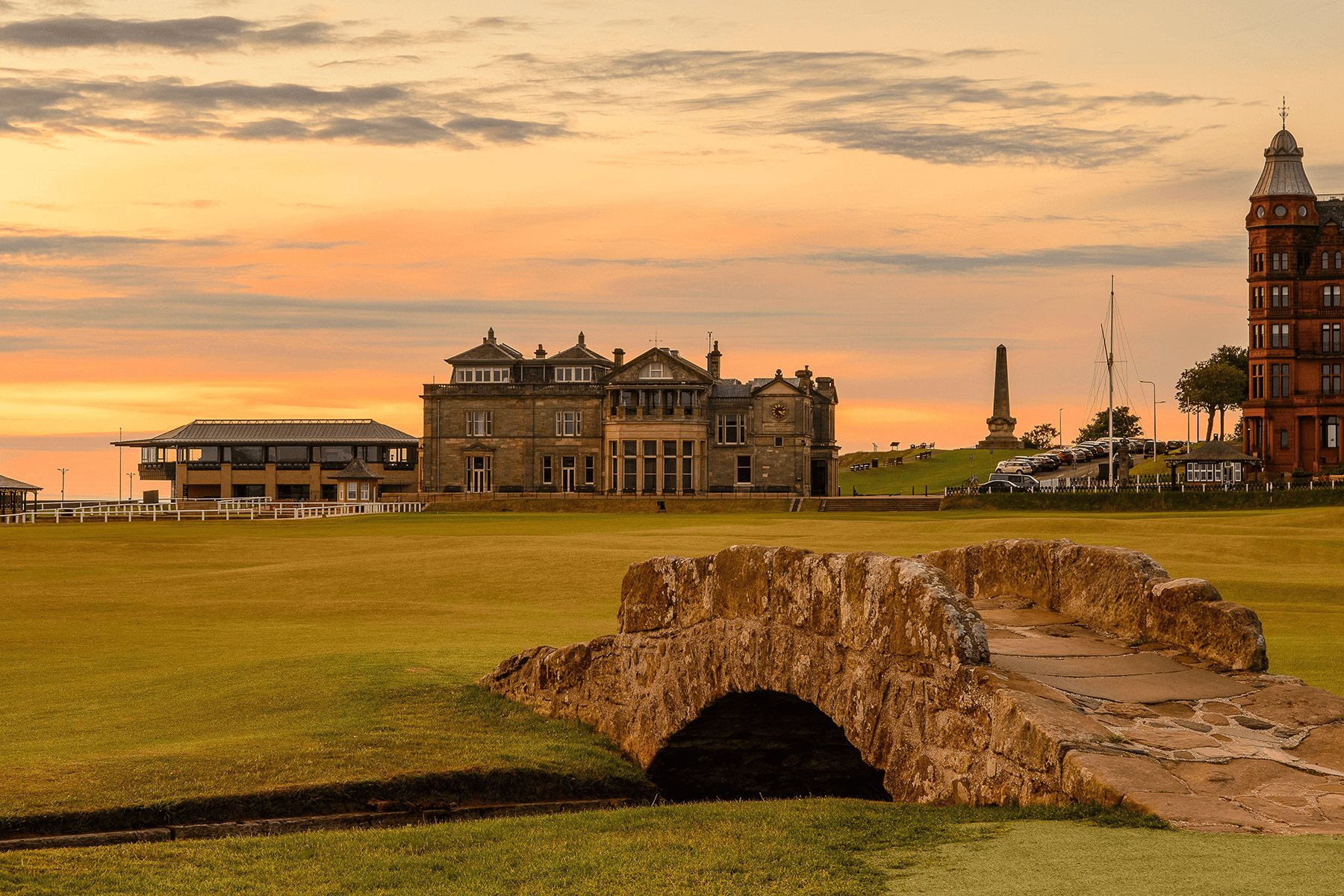
The Old Course at St Andrews makes the list despite everything I just said, because it is actually accessible if you know the system. The ballot opens at 2pm the day before play. You enter online, and results come out by 4pm. The odds aren't great in peak summer, but in shoulder season (late April, early May, October) they improve significantly. Green fee is £340 in summer 2025. If the ballot doesn't go your way, the New Course (£130) and the Castle Course (£180) are both excellent and bookable in advance. Don't overlook them just because they're not "The Old Course."
Kingsbarns sits 7 miles south of St Andrews and is the best modern links course in Scotland. Opened in 2000, designed by Kyle Phillips, and it feels like it's been there for 200 years. Every hole has a sea view (rare even in Scotland), and the routing flows naturally along the cliffs and through the dunes. Green fees run £378-448 depending on the month. Expensive, but most golfers who play it rank it as the highlight of their trip.
Cruden Bay is 30 minutes north of Aberdeen and routinely called the most underrated course in Scotland. Tom Simpson's 1926 design runs in a figure eight along the North Sea, weaving through dunes the size of small houses. It sits at 53 on Golf Digest's World's 100 Greatest, but the atmosphere is nothing like a top-50 course. The clubhouse is welcoming, the members are friendly, and green fees are a fraction of what you'd pay at comparable courses. If you're building a trip around Edinburgh or St Andrews, Cruden Bay is worth the drive north.
Dumbarnie Links is the newest course on this list, opened in 2020 on the Fife coast about 11 miles south of St Andrews. Clive Clark designed it on a stretch of land that climbs from sea level to about 80 feet above, which gives you views across the Firth of Forth on clear days. It's already climbing the rankings and it's far easier to book than its neighbors. A good pairing with Kingsbarns if you're basing yourself in St Andrews.
Royal Dornoch is the pilgrimage course. It sits further north than most golfers expect (about 3.5 hours from Edinburgh, an hour north of Inverness), and that remoteness is part of its character. Tom Watson once said it was "the most fun he'd ever had on a golf course," and the Championship Course regularly lands in the world top 10. The greens are plateau style, meaning anything slightly off target rolls away. Green fees are steep for the Highlands, but the experience justifies every pound. The Struie Course next door is a terrific secondary option at a lower price.
Castle Stuart overlooks the Moray Firth near Inverness and has one of the most dramatic visual settings in Scottish golf. Gil Hanse's design uses elevation changes and framed views of the water on nearly every hole. It hosted the Scottish Open several times and is now part of the Cabot collection. Green fees are premium tier, but the conditioning is immaculate. Pair it with Dornoch for a Highlands double.
Brora is 16 miles north of Dornoch and might be the most charming golf experience in Scotland. James Braid's design sits on a narrow strip of links between the road and the sea, and you'll share the course with sheep and cattle that graze the edges of the fairways (electric fences protect the greens). Peter Thomson called it "the best traditional links course in the world." Green fees are under £100. If you're already going to Dornoch, there's no excuse to skip Brora.
Nairn is between Inverness and Castle Stuart, and it's the kind of course that locals will name before tourists do. A proper championship links (it hosted the Walker Cup in 1999) with firm, fast fairways and greens that read harder than they look. Less expensive and less crowded than its famous neighbors, which is its own kind of luxury.
Prestwick is where the Open Championship was born. The first 12 Opens were played here, starting in 1860, and the course hasn't changed much since. It's quirky, blind shots included, and it rewards imagination over power. The Cardinal Bunker (a massive railway-sleeper-faced pot bunker on the 3rd hole) is one of the most photographed hazards in golf. Visitor access is available on certain days of the week. Check with the club ahead of time.
Royal Troon hosted the 2024 Open and will again in the rotation. The Old Course is a true championship test, but what most visitors don't realize is that the Portland Course (the club's second course) is also open to visitors at a much lower fee and gives you the same Ayrshire coastline. The 8th hole on the Old Course ("The Postage Stamp," a 123-yard par 3 to a tiny elevated green) is one of the most famous short holes in the game.
Western Gailes is 4 miles north of Prestwick and is the locals' favorite on this stretch of coast. Founded in 1897, it's a pure out-and-back links with the sea on one side and the railway on the other. Less expensive than Troon or Turnberry, consistently ranked in Scotland's top 20, and rarely crowded. If you only play one Ayrshire course that isn't a major championship venue, make it this one.
Machrihanish sits at the tip of the Kintyre Peninsula, which means getting there involves either a 3.5-hour drive from Glasgow down a single-track road or a short flight to Campbeltown. That remoteness keeps the crowds away, which is part of the appeal. The opening tee shot, played across the corner of the beach with the Atlantic on your left, is regularly called the most exhilarating first drive in golf. Old Tom Morris laid out the course in 1879. Green fees are reasonable. The journey is the commitment.
Machrihanish Dunes is the newer course next door (opened 2009) and was built with an extreme environmental philosophy: only 7 acres of the entire site were disturbed during construction. The routing feels wild and natural in a way that no other modern course matches. Play both in a day if you've made the trip.
Askernish on South Uist in the Outer Hebrides is the most remote course on this list and possibly the most remarkable. Old Tom Morris laid it out in 1891, it was lost and overgrown for decades, and it was rediscovered and restored starting in 2005. Cows wander the course. The views are absurd. Green fees are about £50. Getting there requires a ferry from Oban or a flight to Benbecula. This is the course for people who want a golf story, not just a golf round.
North Berwick is 30 minutes from Edinburgh and plays like a museum of golf architecture. The holes date back to the 1800s, and many of them inspired features that architects have copied around the world for a century. The 15th hole ("Redan") is the template for one of the most replicated holes in golf design. The course is short by modern standards, but the creativity of the green complexes makes length irrelevant. Very playable, very fun, and the town itself is worth a half-day.
Gullane No. 1 sits a few miles from North Berwick and offers sweeping views of the Firth of Forth from its higher holes. It's a proper test without being punishing, and the conditioning is reliably excellent. The 7th hole, which climbs to the highest point on the course and opens up a panoramic view, is the one you'll remember.
Muirfield makes the list with a caveat. It's a private club (The Honourable Company of Edinburgh Golfers) and visitor access is limited to certain days. But it is possible to get on, especially midweek, and the course is routinely ranked in the world's top 10. If you can secure a tee time, take it. The bunkering alone is a masterclass.