Destinations
The Best Winter Golf Destinations
A complete guide to where to play when your home course is unplayable, from desert escapes to international golf trips.
Destinations
A complete guide to where to play when your home course is unplayable, from desert escapes to international golf trips.
The golf season in the northern US, Canada, the UK, and northern Europe ends sometime in November and doesn't restart until April. That's 5 months. If you're someone who plays 3-4 times a week in summer and then goes cold turkey for half the year, you know the restlessness that starts around December and peaks in February.
Here's where to go when your home course is frozen, flooded, or buried.
The default winter golf trip for Americans, and for good reason. The Scottsdale/Phoenix corridor has over 200 courses, green fees that drop from their October peak by mid-January, and weather that's reliably 18-24°C from December through February. You're playing in shorts while checking the weather app to see what fresh horror is hitting your home city.
The top courses (We-Ko-Pa, Troon North, TPC Scottsdale) charge $200-350 in peak season, but the value tier is deep: Quintero, Ak-Chin Southern Dunes, and the municipal courses in the Phoenix system offer rounds under $100 that are better than most private clubs in the Midwest.
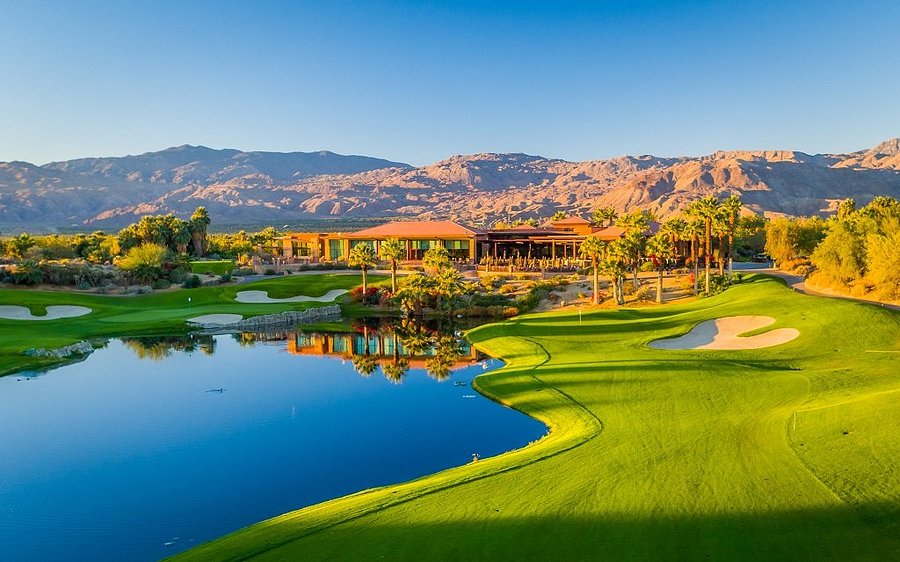
Palm Springs runs on a similar calendar. The Coachella Valley gets even less rain than Arizona, and the mountain backdrop (San Jacinto rising 10,000 feet from the valley floor) gives the landscape a scale that flat-desert courses can't match. PGA West, Indian Wells, and The Classic Club are the headliners.
The downside: everyone has the same idea. December through February is absolute peak season, and tee times at popular courses book up weeks in advance. Midweek travel helps. January is busier than February.
For European golfers, the Algarve is what Scottsdale is for Americans: the obvious answer, reliably excellent, and worth the trip even if it's your 5th time. 300 days of sunshine a year, courses in peak condition during the European winter (the grass recovers from summer stress by November), and green fees that drop 20-40% from June-September rates.
San Lorenzo, the Old Course at Vilamoura, and Vale do Lobo Royal are the marquee rounds. Palmares and Espiche near Lagos are the value plays. The whole region is bookable from Faro Airport, with every course within a 45-minute drive.
Winter temperatures in the Algarve run 14-18°C during the day. You'll want a sweater in the morning and you'll take it off by the 4th hole. The wind picks up in the afternoon, so morning tee times are generally preferable.
The Western Cape's golf season runs opposite to the Northern Hemisphere's: their summer (November through March) is your winter. Cape Town has a handful of genuinely world-class courses within 45 minutes of the city, and the combination of quality golf, a world-class food and wine scene, and stunning scenery makes it one of the best overall golf trips you can take.
Fancourt (Links Course) in George is a Gary Player design that consistently ranks as the best course in Africa. It's an inland links built on sand, with conditioning and design quality that compete with anything in the UK or Ireland. Pearl Valley in Franschhoek (Jack Nicklaus design, set among vineyards) and Steenberg in Constantia (nestled below Table Mountain) are the other standouts near Cape Town.
The currency exchange (South African rand to US dollar or British pound) makes everything dramatically cheaper than equivalent quality in Europe or the US. A round at a top South African course runs $50-100 USD. The wine is $5 a bottle. The restaurants are world-class at a fraction of London or New York prices.
The Garden Route (George, Knysna, Plettenberg Bay) adds a road trip element with courses along one of the most scenic coastlines in the world. Combine 3 days in Cape Town with 3-4 days on the Garden Route for the full experience.
The Canary Islands sit off the northwest coast of Africa and maintain 20-25°C year-round, which makes them the closest warm-weather golf destination for golfers in the UK, Germany, and Scandinavia. The flight from London is 4.5 hours. The time zone is the same as the UK in winter. The courses are built on volcanic terrain, which gives the landscapes a texture that flat coastal resorts can't replicate.
Tenerife has the strongest concentration: Costa Adeje, Golf del Sur, and Buenavista (designed by Seve Ballesteros along coastal cliffs) are all worth playing. Gran Canaria offers Real Club de Golf de Las Palmas (the oldest club in Spain, founded 1891) and Meloneras Golf (a beachside resort course).
Lanzarote has Costa Teguise, which plays across lava fields with the Atlantic visible from most holes.
The courses aren't at the level of the Algarve's best (fewer top-50 contenders), but the climate is warmer, the flights are shorter from Northern Europe, and the variety of volcanic terrain makes the rounds visually distinctive.
Thailand's golf scene is enormous (250+ courses), cheap, and built around a service model that's unlike anything in Western golf. Every course provides a caddie (typically included in the green fee), and many caddies are experienced enough to read greens, select clubs, and navigate the course better than you can. The tropical climate means year-round play, and the dry season (November through March) lines up perfectly with the Northern Hemisphere winter.
Bangkok has over 50 courses within 90 minutes of the city. Alpine Golf & Sports Club, Thai Country Club, and Nikanti Golf Club are the best of them, offering tournament-level conditioning at green fees of $80-150. Outside Bangkok, Chiang Mai in the north has cooler temperatures and mountain courses like Chiang Mai Highlands and Alpine Golf Resort Chiang Mai. Hua Hin on the coast is a traditional golf resort town with Black Mountain (ranked the best course in Thailand) as the anchor.
Green fees at Thailand's top courses run $80-200, including caddie. Mid-tier courses are $30-60. The food is extraordinary, the hotels are cheap by Western standards, and the cultural experience (temples, markets, beaches) makes it a complete trip beyond the golf.
The UAE has invested heavily in golf (it hosts 2 European Tour events annually), and the courses in Dubai and Abu Dhabi are maintained to a standard that few places on earth can match. The desert climate means zero rain from October through April, and winter temperatures (20-28°C) are ideal for golf.
Emirates Golf Club (Majlis Course) in Dubai is the course where the desert golf concept was born. Opened in 1988, it was the first grass course in the Middle East, and the clubhouse (designed to look like Bedouin tents) is one of the most recognizable structures in golf. The Faldo Course is the second 18 on the property. Jumeirah Golf Estates (Earth Course) hosts the DP World Tour Championship and is one of the best resort courses in the Middle East.
In Abu Dhabi, Saadiyat Beach Golf Club plays along the Arabian Gulf with natural dunes and coastline, and Yas Links is a Kyle Phillips design that's consistently ranked among the best courses in the region.
The trade-off: cost. Green fees at the top courses run $200-400, and hotels in Dubai during peak season aren't cheap. But the infrastructure is immaculate, the weather is guaranteed, and the 7-hour flight from London (or the direct flights from most European capitals) makes it an accessible long-weekend option.
The least exotic option on this list and the one that works best for Americans who don't want a passport stamp. Florida has over 1,000 courses, and while many of them are flat and forgettable, the top tier is strong. The advantage is logistics: cheap flights from every major US city, no jet lag, and enough courses that you'll never play the same one twice.
Streamsong in central Florida is the best golf resort in the state: 3 courses (Red, Blue, and Black) designed by Coore/Crenshaw, Tom Doak, and Gil Hanse, respectively, built on an old phosphate mine with rolling sand dunes that look more like Scotland than Florida. It's a pure golf resort (no beach, no theme parks) and the quality of the courses is genuinely world-class.
TPC Sawgrass near Jacksonville is open to the public and includes the Stadium Course (home of the Players Championship). Innisbrook (Copperhead Course) near Tampa hosts the Valspar Championship. Reunion Resort near Orlando offers 3 courses (Watson, Nicklaus, Palmer) and proximity to everything Orlando has for non-golfers.
Winter in Florida means 18-25°C, occasional rain (less than summer), and green fees that are at their annual peak. Book ahead for Streamsong and TPC Sawgrass; the rest of the state has enough inventory that you can find tee times on shorter notice.
If you want: guaranteed weather and zero hassle → Arizona or Palm Springs. If you want: the best courses for the money → South Africa or Thailand. If you want: a short flight from Europe → Algarve or Canary Islands. If you want: world-class courses and a resort experience → Streamsong or the Algarve. If you want: golf plus culture plus food → Thailand or South Africa. If you want: a long weekend, not a full trip → Dubai (from Europe) or Florida (from the US East Coast).
Winter golf isn't a consolation prize. Some of the best golf experiences in the world happen between November and March, in places that are specifically built for the season. The only thing you're compromising on is bragging rights about playing through the cold. And nobody's impressed by that anyway.